Wednesday, June 6, 2012

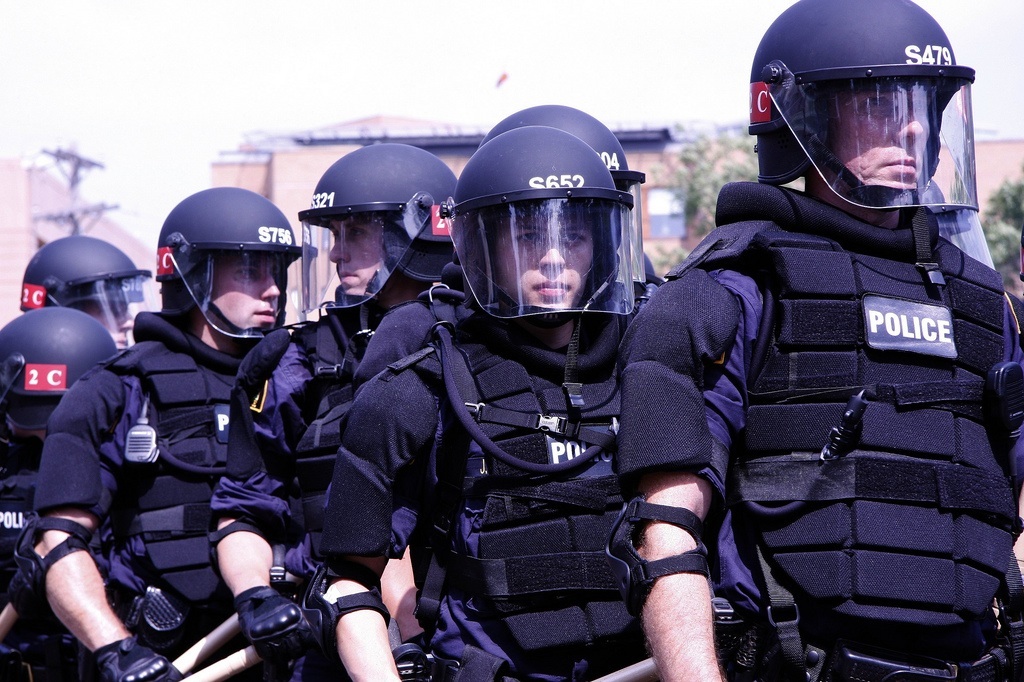
Abuse of police power in Colorado?


In continuation of a theme, presented previously by UVM contributor Overwatch , the Rothbardian blog Capitalism Is Freedom is spreading the word about what seems to be an overzealous reaction on behalf of law enforcement to a bank robbery in Aurora, Colorado.  Denver news outlet, KMGH channel 7 (local ABC affiliate) , reported that "Aurora police stopped dozens of cars and pulled out their drivers at gunpoint looking for a bank robbery suspect Saturday afternoon.".  Is this use of police power justified?  Head over to the Unofficial Version Magazine Facebook page to leave your opinion on this story by commenting on the link to this article.  Also feel free to comment through our Twitter feed and use the hashtag #AbuseOfPower.

Saturday, June 2, 2012

Illusions and Cost by Overwatch


Illusions and Cost: A look at the Western State Security Apparatus

by Overwatch


In my last article, I attempted to explain time preferences and to a lesser degree, opportunity cost. As a refresher, opportunity cost is whatever you give up to make the choices that you make. As an example: If you decide to go to a movie instead of going out to eat, your opportunity cost is going out to eat. Opportunity cost applies to both time and money. I want to use this economic principle and address one of the most basic functions of coercive government: The Justice System, to include but not limited to police, courts, prisons, executive administration, etc.
Even the minarchist accepts the need for government to provide these functions, and the legitimacy thereof. To talk disparagingly of policemen, courts, or anything else related to law creation/enforcement/punishment, is to be eyed as a "criminal sympathizer", or possibly a criminal in fact. Why would any "law abiding citizen" have a problem with the boys in blue or the venerable judges? I will attempt to address two objective reasons here: Illusions and Cost.
It is no secret that the domestic security apparatus in the United States is larger than ever. Police departments are purchasing drones and tanks, the Border Patrol has checkpoints all along the border, the TSA inspects everyone boarding a plane, security camera networks abound in midscale and large cities. This apparatus is not free, but the gross expense is justified in the name of "safety". But does the apparatus actually provide safety? If so, safety for and from what?
Let's start with police. The most iconic of all local state functionaries, the propaganda says that cops do the dirty work in the streets of Everytown, USA so that we may sleep safe in our beds. Is this true? Let's take a closer look.
First, we must identify the threat. In this sense, the threats to the individual are murder, rape, theft, and assault. How do police protect you from these attacks? The Supreme Court has specifically ruled that the police are under no obligation to protect you (Castle Rock vs. Gonzales). So what are we paying them for? Glorified cleanup crews, in the case of legitimate crimes. Theft in many cases isn't even followed up on, and the number of violent crimes against the average citizen are startlingly small in a statistical sense.
Police do have their hands full though. With what? The War on Drugs, and crimes against the state. In other words, victimless crimes. Drug laws, speed limits, licenses and regulatory fee enforcement. Are you any safer when there is a drug bust? Potentially, but why was there a "Drug operation" of "thugs" operating to begin with? The consequences of arbitrary state laws. Do you feel any safer when you see the patrol car hiding behind some bushes next to the highway? Of course not.
This does not even begin to cover the cost of prisons, not only monetarily, but on the fabric of society itself. By treating people who commit victimless "crimes" as criminals, the incentive to not participate in actual criminal activity is eroded, families are fractured, and resentment against "society" grows.
So we spend billions on police and prisons, who not only are under no obligation to keep us safe, but actively work to make our lives hell if we so much as step outside of ever shifting, arbitrary lines. This is certainly not freedom, and we receive only the illusion of security in the tradeoff. What is a voluntary alternative approach?
Let's say 5% of everything you make goes to pay for the law enforcement apparatus. If you make the national average of $41,000 per year, $2,000 goes to this cause. What could you otherwise do with those earnings to actually provide a measure of safety for yourself and/or those around you, without the added assault on your freedom?
Maybe you and your neighbors could pool this saved money and hire an actual night watchman. Maybe you could purchase a firearm and requisite training/accessories. Maybe you could install your own security system. Also, the money and effects thereof would accumulate over time. So this year you purchase the firearm and open and insurance policy against loss by theft/murder/assault. Next year you purchase the security system. The following year you hire a security firm. If the security firm fails to protect you and/or your property, they may be fired, unlike the police, giving them an actual incentive to perform their job. Over time you may be able to boast quite the comprehensive personal safety system.
Let us say that even with all these different steps, a crime is committed. Let's say that someone manages to steal something from your property. Insurance covers the loss, and may or may not review crime statistics in your area to see if rates may need to rise (just as car insurance does in areas prone to carjacking). Your loss is mitigated and you may move on. Why are you concerned about the thief "getting away with it"? If the population has taken general measures of protection and defense, and he continues to attempt to steal, he cannot be eternally "lucky". If he is, it's no worse than the police taking your case and tossing it into the back of a filing cabinet. If, in a popular argument, the thief is stealing because there is no "social safety net" and he is trying to eat, even more reason to let it go.
Let us say something worse occurs, such as murder. In general, the same thing applies. Insurance against murder protects the financial situation of the family, and if you had already taken precautions for physical security, nothing the police could/would have done would have changed the outcome. So now we are left with the problem of "justice". What is the objective difference between the investigation/court/prison process and either "vigilantism" or doing nothing? Certainly little difference from the position of the person assaulted and/or the bereaved family. Conversely, the cost for the former process only adds insult to injury. The total number of homicides in the US in 2007 was 18,361. The conviction rate was only 61% in 2007. So we are willing to spend billions of dollars a year, to ensure that 11,200 people in a country of over 300 million are "put in a timeout" (which costs even more). This doesn't even go into how many of the homicides were related to the "War on Drugs". Also, we have no way of knowing if those 18,361 people may have been able to protect themselves had it not been for the cost and existence of the law enforcement apparatus. It certainly doesn't matter to them after the fact that the boys in blue show up with the chalk.
Contrary to popular belief, the state and it's law enforcement apparatus creates criminals, it does not protect the population from them. Of course, the smarter criminals find ways to work from inside the state instead of against it. Think about that the next time you see a smiling politician, a police cruiser, or a stern military officer.

Saturday, May 19, 2012

UVM's New Angle


Changes are coming to Unofficial Version Magazine, and our hiatus will soon come to an end.  First of all, we have a new direct email address:  UnoffcialVersionMagazine@h-and-j-enterprises.com.  Please direct all correspondence to this address from now on, and please feel free to write!  We welcome any input from our readers!
Now, on to the above image.  It displays the new format for UVM:  Unofficial Version Magazine will become an anarchist publication.  Anarchism is a misunderstood, and to the surprise of some, diverse worldview, which we hope to educate all those interested about the facts and nuances of this belief system.  Content will remain basically the same:  UVM will be filled with news summaries, insightful articles, and intelligently written editorials.  Please check back regularly with unofficialverionmagazine.com for details!

Thanks, J. Frederick, editor
J. Frederick on Facebook

Tuesday, April 17, 2012

Political Divisiveness Has Officially Ruined Everything an editorial by Jeremy Frederick

Political Divisiveness Has Officially Ruined Everything

by Jeremy Frederick

Politics in the United States have become incredibly divisive over the past decade, and to add insult to injury, ubiquitous. There's no avoiding politics. People used to identify themselves by their religion, their ancestry, and even their subculture. Now everyone wears their party affiliation on their sleeve. Of course, with there being only two eligible political parties in our country, it creates a clear and definite line between liberal and conservative, left and right, democrat and republican. All this has done for our society is divide us into two neat little groups: red states and blue states. Nothing else matters, and this became apparent to me when I noticed the one consistent love, indeed passion of my life to be polluted by this asinine pissing contest that is politics. I'm talking about the politicization of heavy metal music.
Metal used to, much like it's unofficial mascot, Satan, stand for rebellion against the status quo, living outside the norm, bucking the system, and whatever cliché you want to throw into the mix. Much like Satan, heavy metal was “the accuser”, the last bastion of rebellion against all that is conformist. Unfortunately, fewer and fewer people realize that choosing one of two sides of the same corrupt coin is about as rebellious a child being sent to bed on time, but sitting there in the dark and quietly refusing to sleep. It's a meaningless gesture that just makes the so-called “activist” feel exhausted. I fear that the subculture of heavy metal as a whole has succumbed to left/right rift that is tearing the western world in two.
I'm not saying that heavy metal has been devoid of politicization, in fact politics have always had a presence in heavy metal lyrical themes. Black Sabbath's “War Pigs”, Iron Maiden's “Two Minutes To Midnight”, and a great deal of Metallica and Megadeth's songs are all relatively early examples. The difference then from now, however, is that those songs represented a disdain for authority, and contempt towards the corrupt base of power in our society. Today, metal musicians and journalists who cover the scene are making their allegiances known, and instead of questioning and criticizing those in power, they are making endorsements.
Dave Mustaine's recent unofficial endorsement of Rick Santorum for President of the United States is a prime example. And then there is the inevitable backlash, from the likes of Odorus Urungus of Gwar and metalsucks.net, who believe that heavy metal music is appropriately placed on the left side of politics and needs to stay that way. To say that heavy metal music and culture has anything to do with conservatism is indeed absurd, but heavy metal as a culture is much more nuanced than that. If heavy metal culture was a stalwart liberal constituency, Barrack Obama would surely be scheduling campaign appearances at this year's Maryland Death Feast, a short flight via Marine One from the White House, but so far his administration has not announced any such plans. Heavy metal culture embraces personal liberty and responsibility, the “Do as thou wilt” of Aleistar Crowley, the “virtue of selfishness” professed by Ayn Rand. If heavy metal should be the back drop of any political movement, it would be libertarianism. But metal does not, and should not do this. Metal is a culture unto itself, and it is a culture of resistance against politics and the quest for power over many by the few. Heavy metal embraces the power of the individual; it is the artistic synthesis of anarchism.
Politics does have a place in music, metal or otherwise. Most people are confused and depressed by current events, especially politics, so they escape them through music. Metalheads are no less guilty of this than hip-hop, pop, country, jazz, or even dubstep fans. That dude in leather jacket with the Immortal patch is more interested in the mythical kingdom of Blashyrkh than The Arab Spring or the GOP Convention, and who could blame him? But, it is good for society, and every sub-culture within it, to be aware of the issues of the day. And this awareness can and should be slipped in surreptitiously among songs about demons, orcs, psychopathic serial killers, or loose women wearing little more than leather chaps. But it's best to keep it in the background. That way if the listener wants to delve deeper into the wider concept and enlighten themselves they can, while the rest of us can bang our heads. Unfortunately, in a now perpetual election cycle and worldwide civil unrest, everyone has their opinion and feels obligated to share it. You know the old joke about opinions being like rectums.
I live and breath 2 things: music (especially heavy metal) and knowledge about the world around me. I want to know what's going on at all times. A negative consequence of that, however, is that I think too much (which is what my friends and family always complain to me about). That's why I need heavy metal. I need the dark humor of a Cannibal Corpse song about turning tattooed human skin into wall hangings and the wild fantasy of a Blind Guardian song. Sadly, evidence is mounting that no one cares about escapism anymore. In this age of instant and infinite information, we're beginning to forget how to empty our heads and daydream for a while.

Wednesday, April 11, 2012

Are conspiracy theorists right? Report confirms fracking cause earthquakes.


The problem with the label "conspiracy theory" is that is used as a blanket term to describe everything from ridiculous conjecture, such as the theory that the world's leaders are actually shape-shifting reptilian aliens, to verifiable, albeit controversial facts.  This culture of blind skepticism has kept many so-called conspiracy theories away from being reported by the media unless the facts become too obvious to ignore, such as in the case of the ATF's "Fast and Furious" operation, which proved that United State's government agencies were involved in the illegal gun trade.
Now a Department of Natural Resources report has shown that the natural gas extraction method known as "fracking" causes earthquakes, just as many so-called "conspiracy theorists" had predicted.  Several news agencies, including NPR confirmed environmentalists' fears today regarding the link between a greater than ever amount of earthquakes in the American Midwest and hydraulic fracturing, or "fracking".

"The New Human Condition" - an editorial by UVM writer Heather Larson-Frederick

The New Human Condition
By Heather Larson-Frederick


I’d like to talk about a favorite topic, and beloved item of many, money. Yes, money. Money is prized, valued, sought after and often-used by many people every day. Some people save their money, some blow all their money, some don’t care about money, and yet others spend a lot of time figuring out how to acquire more of it. I’m here to tell you about my own experience down the money road, and what I’ve learned from it.
Ever since I can remember, money has made the world go round. My dad worked hard and long to make the green so he could buy awesome things. A home, two new cars, and a boat, just to name a few. We took weekenders and vacations. When CD players were the new and very expensive thing, my dad bought one. I think at the time, it cost around $700, which I can imagine, was akin to about $3000 in today’s inflated economy. I can also imagine all the long, hard hours my dad worked for that money. My dad left for work at about 6 o’clock in the morning, and made it back home from work about 6 o’clock in the evening. Five days a week, and sometimes Saturdays, this was my dad’s life.
Looking back, I didn’t spend much time with my dad. To be fair, when we did spend time together Dad made it count, but it was still wasn’t very much. That was my first lesson in money, money is more important than time. The lesson has proven itself true time and again over the years. In general, money means more to people and is more important than time. The time they spend with their loved ones, the time to enjoy their hobbies, the time to sit back and relish their lives.
When I got older and moved out on my own money woes followed. I was expected by my family, and the culture at large, to get a good job, work hard, make lots of money, and, most importantly, acquire the goods that would elevate my socio-economic status that would prove my success in life. That was my second lesson in money, money is the measure against which your success is determined. People are only considered successful if they have lots of money and all the material goods associated therewith.
I tried, I really did. I tried to get a fabulous career that seemed glamorous to other people and would garner me a high wage. I went to college (a few times) and tried my hand at various careers. I worked in meat packing, I managed a gas station, I worked in accounts payable, and I even spent quite a few years as an administrative assistant. Sure, I made a decent wage at each of these jobs, but I never had any money. Never. The truth be told, I hated all of these jobs and in each one, I would always daydream about the day I could escape to a better job. One that treated me better, one where I would make more money and one that I could call a career for life. That was my third lesson in money, having money will make you happy and give you a fulfilling life.
It’s the new human condition. Money makes or breaks lives and determines happiness. You know what I say? Bullshit. The minute I changed my viewpoint where money was concerned was the minute I took charge of my own life and my own destiny. Does money rule you or do you rule your money? The latter is where I firmly sit. No longer does money rule my time, my time to enjoy my life, my children, my husband, my friends and my hobbies. No longer does money define my successes and failures, I’ll define those thank you very much. No longer does money determine my happiness or how fulfilling my life is. My life is exactly what I want it to be, and it’s going exactly where I want it to.
I no longer work very many hours; in fact, I only work enough hours to pay for my necessities. Sure, I don’t have all the newest of gadgets. I don’t own my own home. Most of my furniture came from a thrift store. I don’t take big fancy vacations or drive a new fancy car. I have something much more important…my life, and I’m going to live it to the fullest. I’m going to live it for myself, not for anyone else because time fades so quickly, and I’m not going to miss a thing. I hope you don’t either. 

Heather Larson Frederick is an urban homesteader, writer, chef, and artist from Omaha, NE.  You can view her blog here:  http://noordinarywoman1.blogspot.com/.  Heather also shares a business page on Facebook with her husband, UVM editor Jeremy Frederick, which can be viewed here:  https://www.facebook.com/pages/H-and-J-Enterprises/223588734389689 

Saturday, April 7, 2012

Book Review: The Alpha Strategy


First with the Tea Party and now with Ron Paul's latest bid for president of the United States, libertarian economics has become a popular topic of interest.  This interest has only been magnified by the cataclysmic global economic collapse of 2008, which we, particularly in the United States, are still recovering from four years later.  Rhetoric is abound regarding wasteful government spending, excessive taxation, fiat currency, and whether or not the economies of the developed world should return to the gold standard.  The jury is still out on the effectiveness of Keynesian Economics and quantitative easing , and frankly all this economic jargon is difficult to digest.  A simple concept such as inflation is admittedly hard enough to grasp, let alone the monetary alchemy performed by Wall Street and the Federal Reserve.
Written by John A. Pugsley in 1980, The Alpha Strategy had a stint on the New York Times best sellers list in 1981.  While some may be asking why a 30 year old book would be relevant today, this subject matter of this book is very applicable to the current state of the world economy.  This manifesto of anarcho-capitalism is likely part of the frame work of present day libertarian philosophy, along with Murray Rothbard's The Mystery Of Banking.  At 99 pages, The Alpha Strategy is a fairly quick, yet heady read.  In this book Pugsley explains inflation and the concept of fiat currency in layman's terms, using many easy to understand analogies.  Finally, he closes out the book with investment strategies for surviving an economic collapse, which was relevant in his day, considering the savings and loan crisis of the 1980's.  Spoiler alert:  they key to surviving economic Armageddon is investing in non-perishable commodities.
While this book is full of helpful hints and takes some of the confusion out of understanding complex economic instruments, it also has an unapologetic libertarian tone, which is hard to digest for the common person who values altruism and social order.  When Pugsley rails against child labor laws, the minimum wage, and regulation designed to protect the environment and safety of workers, it is enough to make all the but the most callous social Darwinist cringe.  The best part of this work, however, is that is available for free online, in .pdf format, and the download is 100% legal.  It is worth reading if understanding what causes inflation and why monetary bubbles grow and then burst, and of course what to invest in to protect yourself from such disasters, is on your short list of concerns.  Of course, a good hour of online research can provide the same results without the overt libertarian rhetoric.

Download The Alpha Strategy here:  http://web.archive.org/web/20110708002739/http://www.biorationalinstitute.com/zcontent/alpha_strategy.pdf

My rating:  6.5/10

This review was written by UVM editor and publisher Jeremy Frederick.  You can follow him on Facebook.